Game development with AI
It took a couple of years using AI extensively as a development tool before I felt comfortable letting it see entire projects.
Or even entire classes/namespaces sometimes.
I feared the crutch and the spy but mostly the rogue corruption of the agent.
But I'd been wanting to test with a large-ish project to see what the new tools offered and it was easier to initiate something from scratch
that had nothing to do with real work.
I wanted something complicated and interesting, but isolated.
So I picked a game concept that I last played around with over 10 years ago, a world-builder somewhat-isometric 2.5D affair. When I did this before,
there was good early progress, but as the game got more complicated features became increasingly difficult to add
and run-time performance
was a problem as I added the mechanics I wanted. Dijkstra's algorithm was melting the motherboard on relatively few nodes.
Finally, abandonment.
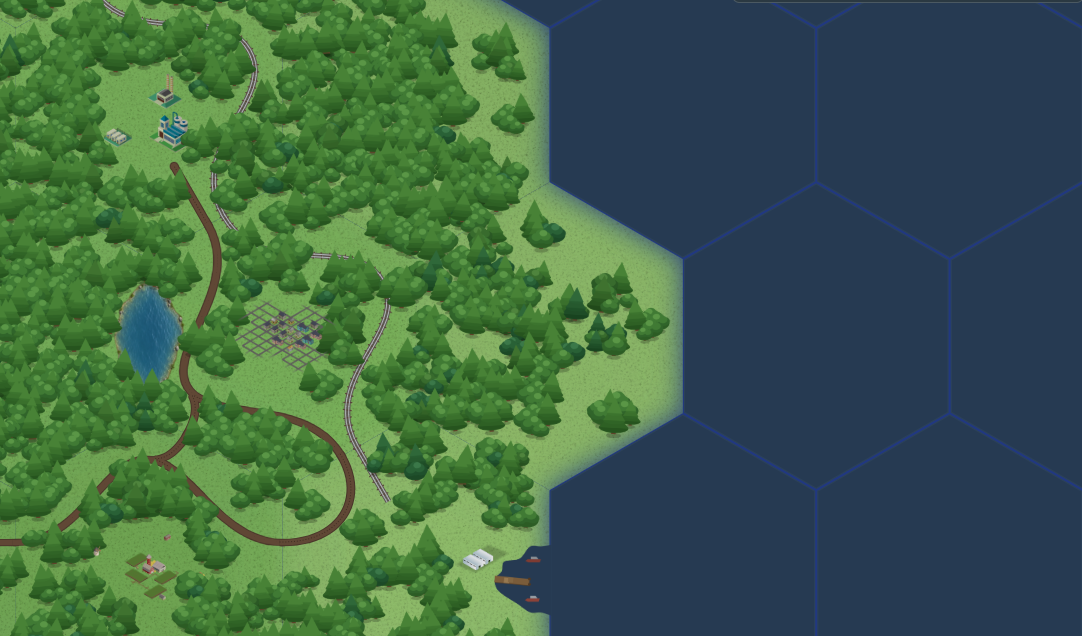
I was impressed when chatgpt just spit out the hexagon map. I wasn't even thinking of taking that on, but after I made the initial prompt, the AI
listed it as one of a series of things it would do to get me started.
Now, if you started something like this with a framework, you might already have that and not be impressed.
But for a "roll your own" type, this is awesome to see. Frameworks can be good for rapid development of something simple and common,
but much beyond that and you will be limited by the imagination of the framework developers. You can do anything you want -- provided it's been done before.
The game now has a lot of component systems constantly interacting. Dijkstra's algorithm is running for a few networks and the economic simulation models supply and demand
fairly well, responding to trade war tactics like flooding the market. People move to live closer to their jobs because human transportion is expensive. It all has a
good organic feel.
It is easy to say that I've gotten much farther along in far less time than in previous attempts.
I can't imagine how much this would have cost via API calls.
But I'm pretty impressed at this point. The project has gotten fairly large with a lot of modules, assets, etc...and the AI performs fairly well with some marshaling.
More and more I let the AI manage, but edit the code myself -- it's just quicker.
I consider the speed up on overall development due to AI to be essentially infinite, as the project would have become intractable some time ago.
I've tested some of the AI features in Visual Studio, but
the IDE gets sluggish and buggy. This will probably improve, maybe it already has but I'm leary -- separation of church and state.
Regarding coding, the speed up was huge in the initial development, shrinking as the codebase grew larger. Occasionally, I wished
"my" code was a little more familiar so little changes could be implemented quickly without hunting lines or typing a prompt which involves about
80 times the amount of text I'm looking to edit.
Dev continues but check it out: islands. Player gets the left island, cpu gets the other. I am trying to make something
like Age of Empires but with islands and a quasi-modern economy.
Only the economy and traffic are reasonably well-developed so far. But soon, artillery and battleships. First, though, a few more commodities...
AI and government regulation
The latter half of 2026 sees no shortage of FUD, just a different incoming trajectory.
Vast unemployment has been set aside and inevitable Armageddon offered up in its stead.
And upcoming midterm elections of course have something to do with the latest uptick in the issue's media coverage,
a harbinger of impending catchphrases and thought-terminating clichés.
Gah.
Fine, but I refuse to give a deuce.
The only need I see for regulation is to explicitly assign the liability for error and the harm caused by AI agents.
Things would tighten up nicely, I bet.
It would suck if AI ends humanity before it fixes our traffic issues, solves the P vs NP problem, and cures cancer.
But no one I know who really uses AI productively is very concerned about AI or AGI.
Most of the FUD comes from the industry itself, casual users and those who don’t use it at all.
The real threat of AI is like the threat of matches in the hands of a child. The problem isn’t just the matches.
Maybe don’t let AI pick the bombing targets. (Where is Isaac Asimov when you need him?)
But the real motivation is to get government contracts lined up and dedicated to the big players.
These companies want to be treated like weapons manufacturers so their economic wellbeing becomes a national security issue.
In the end, this will be a massive set-aside for these companies and their investors.
Which will be a drag to watch, but the regulations will have meaningful impact only on the revenues of the big players.
I am interested, though, in learning what exactly would get you put in jail. The idea that you would go to jail for
“developing or creating an artificial intelligence system that surpasses human cognitive abilities across most tasks”
might be a little bit alarming, depending on your regard for human cognitive abilities.
--2025
2025 was the last year in the period of time covering AI's infancy and adolescence, basing my opinion mostly on
the commercial availability of AI and the degree of utilization. A nice tidy number, too.
There were holdouts all through 2024 (couldn’t blame them), but the quality of the models exceeded some threshold in 2025.
The most reluctant were brought onboard by Claude, which in that period produced output that was subtly better than the competition.
It reminded me of the difference between my IPad and my Android tablets.
2026--
Widespread adoption and universal awareness.
Some say we have entered a time of acceleration, some say we have already reached a plateau.
At some point this year (early 2026), I started to get that queezy 'uncanny valley' feeling reading Claude text.
Strange cuz I've never gotten that from text before and didn't really think it was possible.

Maybe this makes sense. Machine Vision preceeded these LLM's by a considerable length of time, and much accomplished pre-gpt regarding
Machine Learning was in the visual context. Current AI-generated visual media has high enough quality to escape the uncanny valley.
Perhaps the quality of GPT-LLM has only just now reached the minimum threshold required to enter.
Where's the fake part?
After the words are made and the words have been lined up, the thinker is no longer required.
A Negativist View
A few years ago there was a Google "engineer" who was claiming consciousness had been achieved by a model that was effectively something shy of
GPT 3. I never worry about AI being conscious but I worry about people thinking and believing it is. How would you disprove it? Unfalsifiable in any
way convincing to an acolyte. The type that is drawn to this assertion will find even more attraction in the near future.
The hype around the regulation push is similar in some respects, though I suspect Bernie Sanders codes more than that engineer ever did.
Deception, fear-mongering, backroom deals -- very human.
Maybe they are right. This stuff is dangerous and we can't have people fooling around with it, kind of like biologicals. We need
governments to take over entirely, like they did with research on deadly pathogens, so that nothing bad ever happens.
A Positivist View
Holding everything else constant, if AI simply attenuates the impact of human error and negligence then a lot of value is
added to human society, and real money is saved on wasted time, remediation and insurance.
The best way to get any share in this is to use AI for one's own benefit as aggresively as everyone else.
I am not an accelerationist, but I am an optimist. We've acquired vast amounts of data in our research institutions, especially
materials research, that
no human has had time to sift through. AI looks to be the best way to brute-compute our way to some useful solutions, as we've seen in the academic realm.
And like other positivists, I think we'll see undeniable benefits soon in the healthcare realm.
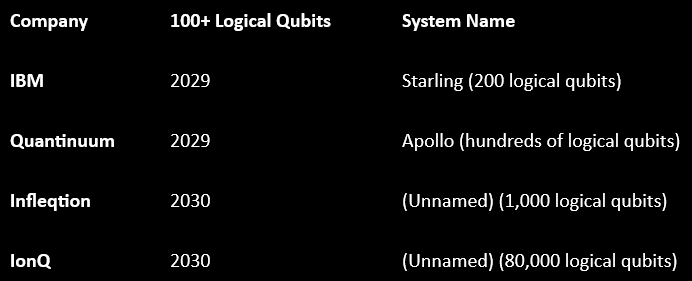
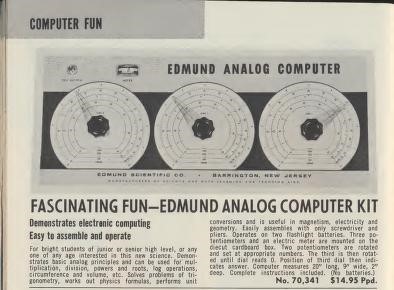
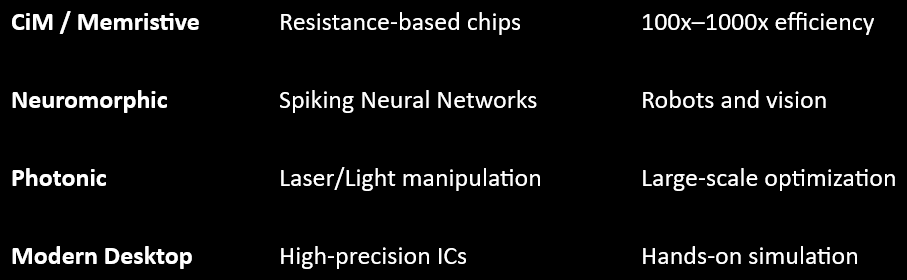
But I look again at that picture up there...